
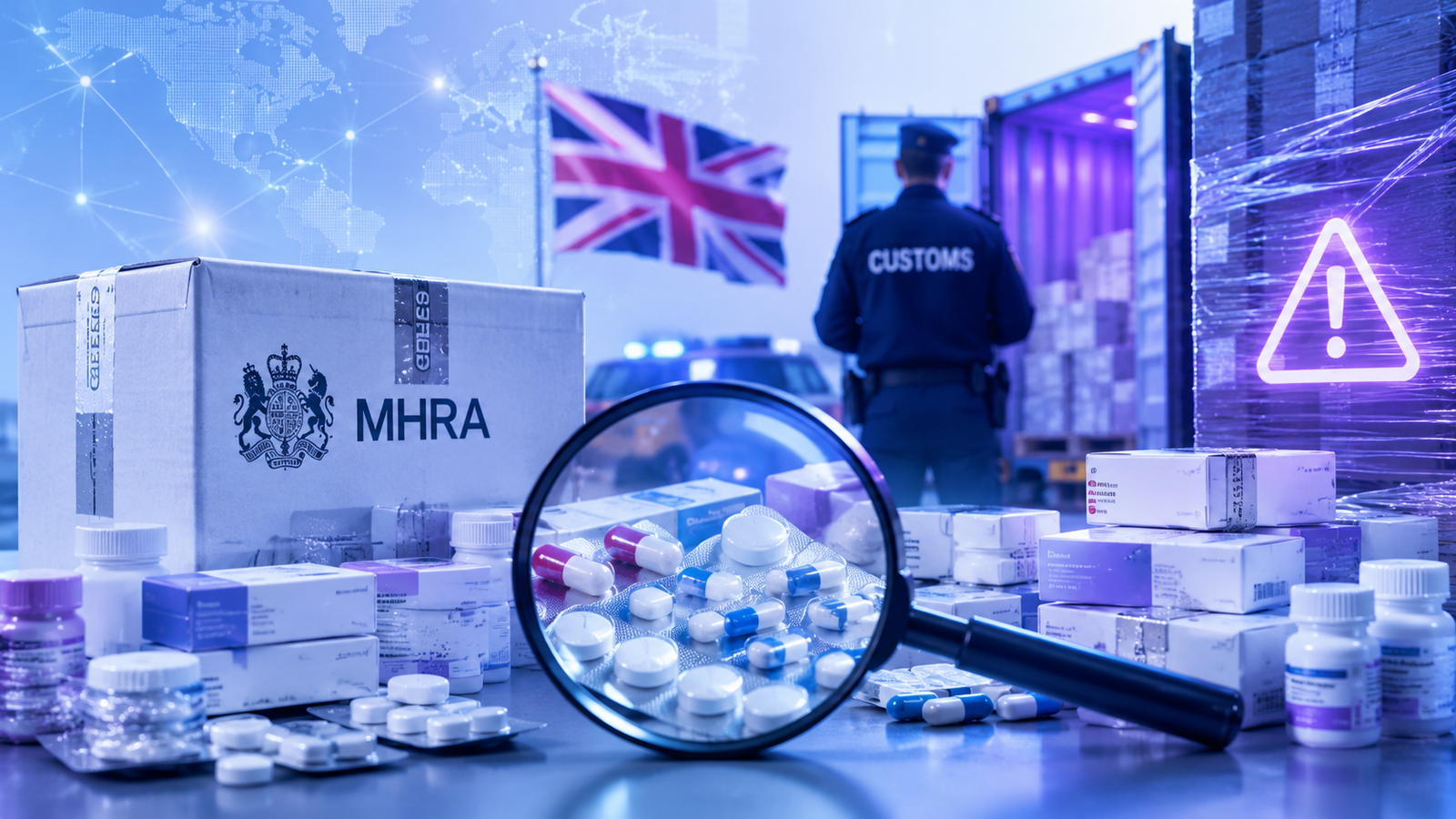
London — Britain’s medicines regulator has seized illegal and unlicensed medicines worth nearly £45 million in 2025, disrupting major criminal networks and revealing persistent vulnerabilities in the pharmaceutical supply chain, according to a statement released by the Medicines and Healthcare products Regulatory Agency (MHRA).
Monitoring Supply Chains at Risk
The enforcement action, carried out by the MHRA’s Criminal Enforcement Unit, targeted unauthorized medicines entering the United Kingdom through online platforms, social media marketplaces, and illicit distribution channels. Officials said the seizures highlight growing risks tied to counterfeit medicines, fake medicines, and weaknesses in supply chain management across the global pharmaceutical industry.
Criminal Networks and Supply Chain Gaps
The MHRA said many of the seized products were marketed illegally to consumers, often without prescriptions or proper regulatory approval. These medicines bypassed legitimate logistics companies, third party logistics / 3PL providers, and licensed warehousing facilities, exploiting gaps in supply chain visibility and supply chain traceability.
Investigators noted that fragmented inventory management systems and inconsistent use of supply chain software across international distribution networks make it difficult to track medicines as they move from manufacturers to end users. These blind spots create opportunities for criminal groups to introduce counterfeit medicines or unsafe products into the pharmaceutical supply chain.
Patient Safety at Risk
Health authorities warned that illegal medicines can pose serious risks, including incorrect dosages, contaminated ingredients, or ineffective treatment. The MHRA urged the public to avoid purchasing medicines from unverified online sellers and to report suspected fake medicines through official safety channels.
The scale of the seizures underscores the challenge regulators face as criminal networks adapt faster than traditional supply chain management systems, particularly when medicines cross borders involving multiple distributors, logistics operators, and storage facilities.
A Global Problem Beyond the UK
While the enforcement action focused on the United Kingdom, regulators acknowledge that similar risks affect the pharmaceutical industry Europe and worldwide. Weak oversight in cross-border logistics, gaps in 3PL Europe / third party logistics, and limited supply chain transparency continue to expose patients to counterfeit medicines Europe and globally.
Experts say the problem is not limited to enforcement, but rooted in outdated systems that lack real-time drug traceability / medicine traceability across the entire lifecycle of a product.
How Technology Can Strengthen Pharmaceutical Supply Chains
Regulators and industry specialists increasingly point to technology as a critical line of defense. Solutions built on blockchain technology and blockchain supply chain frameworks can create immutable records of every transaction, improving supply chain visibility and supply chain traceability.
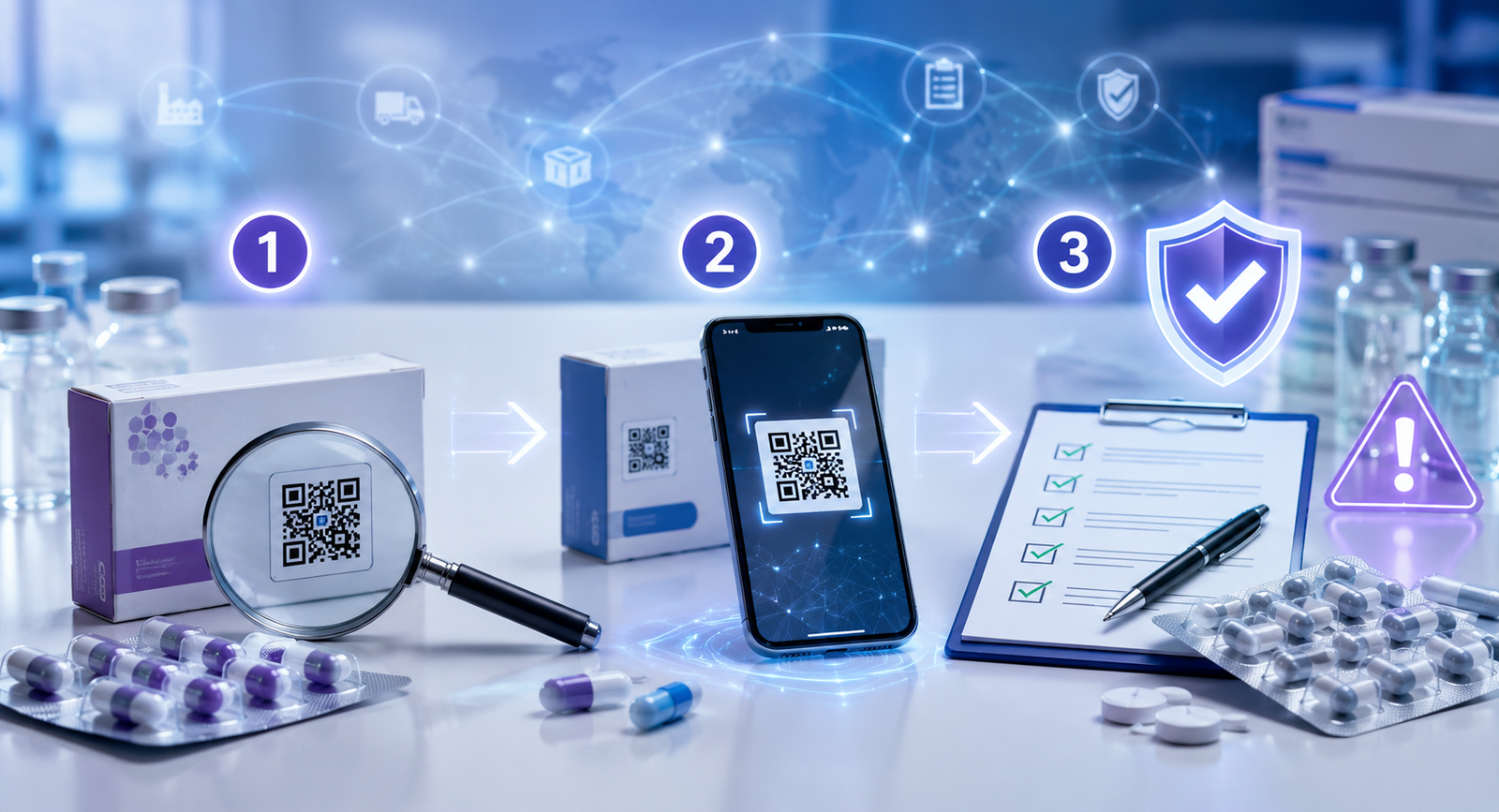
By combining medicine serialization, drug authentication, and automated compliance through smart contracts, modern systems can reduce reliance on fragmented databases and manual verification. Integrated inventory management systems allow regulators, manufacturers, and distributors to verify medicines instantly as they move through the pharmaceutical supply chain.
Where Synchrypt Fits In
Platforms such as Synchrypt are designed to support secure pharmaceutical supply chain operations by enabling end-to-end drug traceability / medicine traceability. Using blockchain technology, blockchain in supply chain architectures, and smart contracts, Synchrypt helps ensure that each medicine is uniquely serialized, authenticated, and verifiable across manufacturers, logistics companies, warehousing, and pharmacies.
By strengthening supply chain transparency and reducing blind spots in distribution, such systems can help regulators and industry stakeholders detect counterfeit medicines earlier—before they reach patients—and reinforce trust across the global pharmaceutical industry.
Source
MHRA — MHRA seizes illegal medicines worth almost £45m in 2025, disrupting major criminal networks